P:F ratio
Jump to navigation
Jump to search




In pulmonary medicine, critical care and anesthesiology, the P:F ratio is the ratio of arterial oxygen concentration to the fraction of inspired oxygen. It reflects how well the lungs absorb oxygen from expired air. [1]
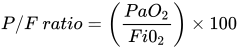
An example in a healthy person:

A higher ratio indicates better gas exchange:
- Normal is 500
- ARDS is < 200
Comparative studies suggest this measure correlates better with pulmonary shunts than does the A-a gradient.[2][3][4]
References
- ↑ Caroline Helwick, P/F Ratio May Be a Marker of Potential Intraoperative Ventilator-Induced Lung Injury, "Coverage of the American Society of Anesthesiologists (ASA) 2009 Annual Meeting", Medscape Medical News
- ↑ Covelli HD, Nessan VJ, Tuttle WK (1983). "Oxygen derived variables in acute respiratory failure". Crit. Care Med. 11 (8): 646–9. PMID 6409506. [e]
- ↑ El-Khatib MF, Jamaleddine GW (2004). "A new oxygenation index for reflecting intrapulmonary shunting in patients undergoing open-heart surgery". Chest 125 (2): 592–6. PMID 14769743. [e]
- ↑ Cane RD, Shapiro BA, Templin R, Walther K (1988). "Unreliability of oxygen tension-based indices in reflecting intrapulmonary shunting in critically ill patients". Crit. Care Med. 16 (12): 1243–5. PMID 3191742. [e]
Categories:
- Pages using PMID magic links
- CZ Live
- Health Sciences Workgroup
- Pulmonary medicine Subgroup
- Anesthesiology Subgroup
- Critical care Subgroup
- Articles written in American English
- All Content
- Health Sciences Content
- Pulmonary medicine tag
- Anesthesiology tag
- Critical care tag
- Pages that use a deprecated format of the math tags